Search
Beneath the surface of official economic data lies a powerful force: the shadow economy, shaping markets in ways we often overlook. This hidden realm encompasses unreported or untaxed economic activities that evade formal tracking, from street vending to unregistered transactions.
Its impact is immense, affecting everything from tax revenues to job creation across the globe. By understanding its dynamics, we can better navigate the complexities of modern economies and foster more inclusive growth.
This article delves into the shadow economy's scope, trends, and real-world consequences, offering insights for policymakers, businesses, and individuals alike. Distorting GDP and employment statistics, it challenges our perception of economic health and stability.
Often called the informal or underground economy, the shadow economy includes activities that avoid official reporting and taxation. It ranges from legal but unreported work to illicit enterprises like drug trafficking.
Definitions vary, but the core is evasion of formal systems, making it a persistent puzzle for economists. This elusive nature complicates efforts to measure its true scale and influence.
By excluding purely criminal acts in some views, it highlights a gray area where necessity and opportunity intersect. Evading formal monitoring or taxation is its hallmark, driven by diverse factors worldwide.
The shadow economy's scale is staggering, estimated at 11.8% of global GDP in 2023. This represents trillions in annual revenue that flow outside official channels.
Historically, it has shown a decline, shrinking from 17.7% of world GDP in 2000. However, recent trends indicate a complex picture with regional variations.
During the pandemic, low and middle-income countries experienced a temporary upswing, linked to economic distress. Shrunk from 17.7% of world GDP in 2000 to 11.8% in 2023, this reduction reflects ongoing policy efforts and globalization.
Key trends include:
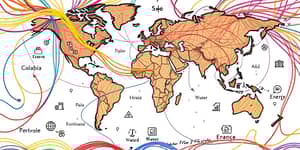
Regional disparities are stark, with the shadow economy playing a larger role in poorer nations. In low-income countries, it can account for over 40% of GDP.
Sub-Saharan Africa shows some of the highest concentrations, often tied to limited formal job opportunities. Conversely, high-income regions like the UAE have minimal shares, as low as 2.1%.
The table below summarizes key regional data:
Country examples highlight extremes: Sierra Leone leads with 64.5%, while Australia and Switzerland maintain shares under 10%. In the United States, estimates range from 5% to 10% of GDP, representing trillions in unreported activity.
Livelihood for disenfranchised populations is a critical aspect, with informal employment sustaining millions in places like Nepal.
Multiple factors fuel the shadow economy, from regulatory burdens to socioeconomic challenges. High taxes and complex regulations often push activities underground.
In low-GDP countries, poverty and unemployment drive participation, as formal jobs are scarce. Corruption and weak institutions further exacerbate the issue, creating a vicious cycle.
Key drivers include:
Understanding these causes is essential for crafting effective policies that address root issues rather than symptoms.
The shadow economy wields both negative and positive effects, creating a complex influence on markets. On one hand, it reduces tax revenues, undermining public services and governance.
It distorts economic data, making policy planning challenging and fostering unfair competition for formal businesses. Reduces tax revenue and public goods, eroding trust in institutions and fueling illicit activities like money laundering.
Negative impacts include:
Positive aspects should not be ignored. In many regions, it provides essential livelihoods, employing millions who might otherwise be excluded. For instance, in Nepal, 85% of the labor force relies on informal work.
This duality means that while curbing the shadow economy is important, approaches must balance enforcement with support for vulnerable groups.
Effective policies focus on reducing the shadow economy through incentives rather than solely through enforcement. Lowering taxes and simplifying regulations can enhance compliance.
Strengthening the rule of law and anti-corruption measures are crucial for long-term reduction. From 2010 to 2020, 131 countries saw reductions, with an average drop of 6.7%.
Key policy measures include:
The future outlook suggests that with stable conditions, improvements are possible, but challenges like globalization and technological changes will shape the landscape.
Quantifying the shadow economy is notoriously difficult due to its hidden nature. Methods like MIMIC models and surveys are used, but results vary widely.
Lack of a universal definition complicates cross-country comparisons, as seen in data spanning 84 to 162 countries. Evades detection and formal tracking, making consistent studies limited and often reliant on estimates.
Challenges include:
Despite these hurdles, ongoing research helps refine our understanding, emphasizing the need for innovative approaches to capture this elusive phenomenon.
In conclusion, the shadow economy is a powerful force with deep market influence, requiring nuanced strategies for management. By acknowledging its dual role and addressing underlying drivers, we can work towards more transparent and equitable economic systems worldwide.
References